

Part one of a four-part series.
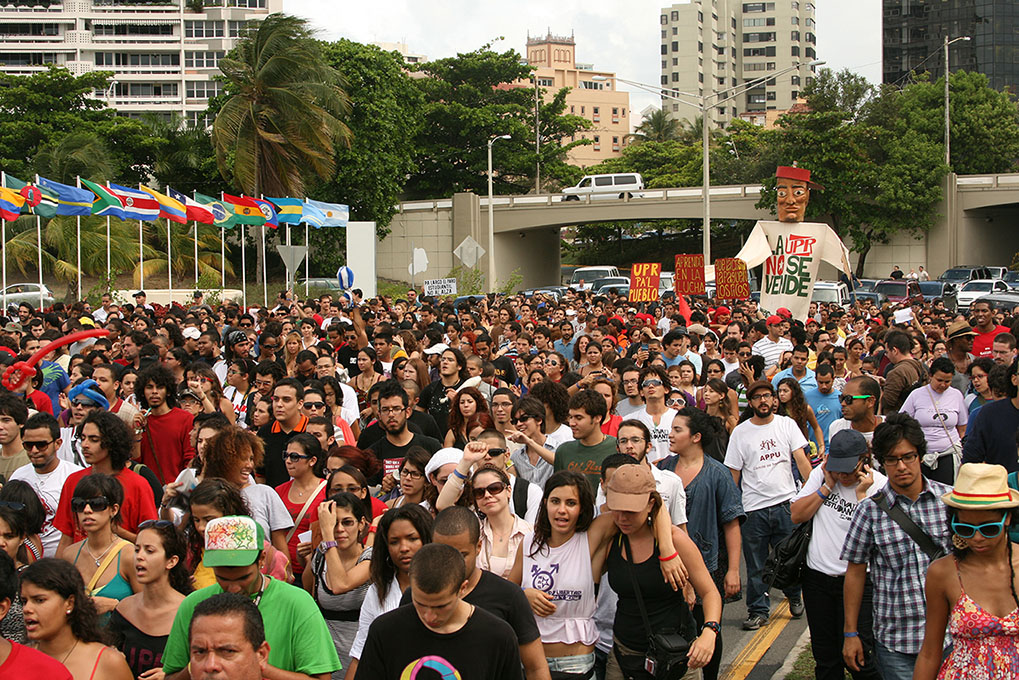
Photo 1: Centro de Medios Independientes de Puerto Rico (2010)
In September 1981, students at the flagship Río Piedras campus of the University of Puerto Rico (UPR) went on strike to stop an across-the-board tuition increase, the first in decades at the state-owned university. The strike, which lasted four and a half months (still the longest uninterrupted student-initiated stoppage in the institution’s history) and led to over three years of police occupation of the campus, marked the start of a new era for Puerto Rico’s student movement. While previous strikes and protests had centered on nationalist and anti-war themes, institutional autonomy from political meddling, or solidarity with campus workers, the 1981-82 strike raised economic issues directly affecting students for the first time. This focus would continue to stir student revolt over the next four decades.
The history of student protests at UPR dates back to about 1919, 16 years after the institution’s founding. Its notoriety as a site of rebellion was cemented by the student strike of 1948, but its most violent confrontations with the state came in the late 1960s through early 1970s, when several lives were lost. The student movement of the 1980s was, in many ways, the product of those fiery preceding years: more experienced and better organized, yet committed to the same revolutionary discourse and tactics. The flagship campus at Río Piedras and, to a lesser extent, the Mayagüez campus were historically the movement’s epicenters (they would continue to be, although the smaller campuses—all founded in the 1960s and 1970s—began to play more prominent roles in 2010).[1]
When rumors of a tuition hike began to circulate (as early as 1980), the major student political organizations on campus were the Federación de Universitarios Pro Independencia (FUPI) and the Unión de Juventudes Socialistas (UJS)[2]. FUPI had been the most prominent student organization during the tumultuous 1960s, while UJS emerged from the confrontations of the early 1970s. UJS leader Roberto Alejandro is broadly remembered as the main figure of the 1981-82 strike. In addition, the student movement at the time included Christian student groups inspired by liberation theology, as well as a handful of smaller Leftist groups. Conservative and pro-government students were also organized, in one or two fleeting groups.
In February 1981, the Consejo de Educación Superior (CES)—the UPR’s board of regents at the time—announced the increase, to be implemented starting in the fall semester. Following an initiative by UJS, a broad Comité Contra el Alza Uniforme a la Matrícula (CCAUM) was formed[3]. Late in the spring semester, CCAUM organized a student referendum in which the hike was rejected by an ample majority of the 7000 students who voted. CCAUM also promoted a boycott of tuition payments once the hike took effect at the start of the fall semester, as well as numerous speak-ins, on-campus rallies, and marches. As its name suggests, CCAUM’s position was not a flat-out rejection of tuition increases, but rather an “income-adjusted” or sliding-scale increase.
A few months after CCAUM’s creation, Alejandro was elected president of the Student Council at UPR Río Piedras. In late August, the council organized the first student general assembly at the Río Piedras campus since 1976. The assembly agreed to give the administration a one-week ultimatum to implement an income-adjusted payment system. When it did not, a second assembly approved an immediate five-day paro (stoppage), and gave the administration another week to reconsider before reconvening to consider making the strike “indefinite” (open-ended), to which UPR Río Piedras Chancellor Antonio Miró Montilla reacted by declaring an academic recess. Early the following week, the Academic Senate named a Mediating Committee, which initiated conversations between CES and the student leadership. These broke down when Miró Montilla abandoned the Mediating Committee, after CES insisted it would not seek additional funds from the legislature.
Following the intervention of two legislators, CES agreed to study alternatives softening the impact of the tuition hike “to the extent that additional resources may be assigned.”[4] However, the “consensus document” did not commit CES to reversing the hike or to any other specific actions for the semester in the course. Under pressure and emboldened by rising public sympathy, a student general assembly held in late September refused to ratify the agreement and declared an indefinite strike. Fernando Picó, one of the mediating faculty members, was disheartened by this decision, which he saw as a missed opportunity: “at no other time were the students closer to obtaining their demands.” According to Alejandro, CCAUM attempted to persuade the Chancellor and the student assembly to grant additional time to discuss the document, but was flatly rebuked by both.[5]
The chancellor once again declared a recess and summarily suspended four student leaders, including Alejandro, and successfully obtained a court injunction barring them from entering the campus, leading to the installation of checkpoints and police-manned fences. In the resulting spiral of violence, faculty became more vocal in calling for an end to these measures. In late October, police were finally removed from campus, but striking students continued to demonstrate. As a result, the Chancellor declared a recess yet again, and the four suspended leaders were arrested and sentenced to several months of prison for violating the court order (but were soon released when the Supreme Court reversed the decision).
In mid-November, CES agreed to a new study of alternatives and to modifying sanctions for the strikers, but rejected amendments proposed by the Mediating Committee, prompting the two faculty mediators to resign. Nonetheless, on November 25, thousands of students gathered on the Great Lawn of the Río Piedras campus to discuss the CES proposal. Barred by the court injunction from leading the assembly from within the campus, student leaders stood with loudspeakers on the back of a flatbed truck parked outside the campus limits. On the pretext of a parking violation, police forcibly dispersed the assembly.
The Supreme Court ordered the administration to allow the celebration of a fifth general assembly on campus, temporarily suspending the injunction against the four student leaders. Two days later, the assembly ratified the continuation of the strike, producing a new police occupation of the campus. CCAUM then offered three conditions for ending the strike: deferment options for those students who had not yet paid for the fall semester; additional need-based financial aid for those unable to pay; and the removal of police from campus. These were initially accepted by CES but later rejected after a meeting with then-Governor Carlos Romero Barceló.
A sixth assembly in January 1982 voted to prolong the strike, but a week later, after what Alejandro later called “the richest of all the experiences in collective debate,” a seventh assembly finally agreed to end it.[6] Although the students’ core demand for sliding-scale tuition was never met, they had secured important concessions from the legislature: one and a half million dollars in additional financial aid for needy students and participation on an official commission, with members of the CES and Academic Senate, to study matters related to the hike.
The end of the 1981-82 student strike did not immediately end confrontations at UPR Río Piedras. Barely a month after the end of the strike, during a celebration of CCAUM’s one-year anniversary, shots were fired during a confrontation between students and UPR security guards. In June of 1982, CES expelled Roberto Alejandro for life, banning him from entering any of its campuses for five years, and requested a permanent police presence at Río Piedras. The campus remained occupied by police until 1985, when a general amnesty for the 1981-82 strikers was also declared.
I have elsewhere described the 1981-82 UPR student strike as the head-on collision of two trains.[7] On the one hand, a radicalized student movement emerged from the clashes of the early 1970s, as a result of the accumulating contradictions of the liberal-populist approach to institutional governance that prevailed from the 1940s until then. On the other hand, a neoliberal program of academic governance decided to test the political waters after years of silent gestation.[8]
Although far-reaching neoliberal policies were implemented across Puerto Rico in the 1990s, student resistance—and the memory of the 1981-82 strike—limited their reach and scope at the UPR until PROMESA’s imposition.[9] UPR students would go on open-ended strikes again in 1991-92, 2005, 2010-11, and 2017.

Photo 2: José A. Laguarta Ramírez (2017)
References
Alejandro, Roberto. 1982. Nuevas voces, nuevos cauces. In Las vallas rotas, edited by Arcadio Díaz Quiñones, 119-229. Río Piedras, Ediciones Huracán.
Laguarta Ramírez, José A. 2016. Struggling to learn, learning to struggle: Strategy and structure in the 2010-2011 University of Puerto Rico Student Strike. Ph.D. diss., The Graduate Center, City University of New York. Accessed February 6, 2026 <https://academicworks.cuny.edu/gc_etds/1359/>.
Picó, Fernando. 1982. La huelga socialista en la Universidad feudal. In Las vallas rotas, edited by Arcadio Díaz Quiñones, 17-35. Río Piedras, Ediciones Huracán.
[1] For a history of the UPR student movement prior to 1981, see Laguarta Ramírez 2016: 54-69.
[2] The following summary is adapted from Laguarta Ramírez 2016: 188-193.
[3] Committee Against the Uniform Tuition Increase.
[4] Alejandro 1982: 136; my trans.
[5] Picó 1982: 23; my trans. Alejandro 1982: 136-139.
[6] Alejandro 1981: 191; my trans.
[7] Laguarta Ramírez 2016: 188.
[8] For an account of academic neoliberalism in Puerto Rico, see Laguarta Ramírez 2016: 100-111.
[9] Puerto Rico Oversight, Management, and Economic Stabilization Act, U.S. Pub. Law 114-187 (2016).