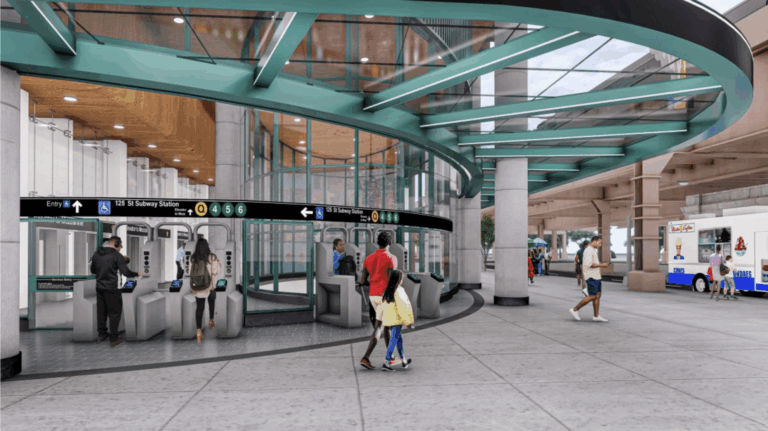


Once again, the state of New York is asking Hispanic families to bear the inordinate costs of public goods from which they are not as likely to benefit in the same measure. The Metropolitan Transit Authority (MTA) is using the power of eminent domain to purchase residential properties occupied by Hispanic families in East Harlem in order to extend the Second Avenue subway line from 96th Street to 125th Street. The city subway, while not a free government service, is nevertheless a highly subsidized public offering that benefits directly and indirectly a vast number of city residents and visitors, business and property owners, and the city and state government themselves.
The property owners whose buildings are being bought by the MTA will receive just compensation as the eminent domain calls for. Other property owners in the vicinity of the extended subway line will benefit tremendously by the appreciation in the value of their property. For other residents and business owners in the neighborhood who may still be able to pay for the rent increases that are likely to follow shortly after completion, as well as the higher-income newcomers who are likely to be drawn to East Harlem and the businesses that cater to them, will have access to a modern and more accessible subway line. But the residents of the expropriated buildings just get a notice of vacancy and a list of rental units that are presumably available for rent, at rates that are unaffordable to them. In other words, they get nothing!
Census Bureau data indicate that between 2012 and 2023, median gross rent in Manhattan’s Upper East Side, the neighborhoods in which the first phase of the Second Avenue subway was implemented, increased by more than 43%, from $1,957 to $2,814. In East Harlem, by comparison, median gross rent increased by 25%, from $973 to $1,223 a month. This rent will undoubtedly increase in East Harlem, thanks in part to this new amenity the displaced families are unlikely to enjoy. Residents of the expropriated buildings receive a notice of vacancy and a list of rental units that are presumably available for rent, at rates that are unaffordable to them, and in some rare cases, are offered assistance with moving costs. In other words, they get very little as they are asked to bear an inordinate burden for the benefit of others without much of a benefit in return.
The MTA indicates they have gone beyond the minimum requirements federal law stipulates in these eminent domain actions. But the protections of Federal Uniform Relocation Assistance and Real Property Acquisition Policies Act of 1970 are simply the minimum standards. Moreover, these protections may not apply to all tenants affected by this law. These externalities should be borne by the MTA, and, in its absence, by the state of New York.
But this reality of displacement of vulnerable communities is nothing new. Hispanics have experienced this before as documented in our exhibit Afterlives of San Juan Hill. This exhibit captures the lived experiences of relocation and displacement of Puerto Rican families and other residents to make ways to “public benefit” institutions such as the Lincoln Center for the Performing Arts and Fordham University, at the height of the so-called Urban Renewal period.
Maggie Ramirez lived through this displacement 60 years ago. She tells us, “All the buildings in New York that were built to accommodate the working class, the middle class, have been sold and now they’re luxury buildings. Affordable housing has gone out the window. And New York is exclusively becoming for the wealthy and rich[…] It’s like, Manhattan is just now a place for the wealthy. Nobody can afford to live here. Nobody.”
At minimum, the costs to be covered by those creating the public good should be the costs of finding a new apartment, that is, real estate brokers who speak their language and understand their needs, preferably within the immediate neighborhood. Along with this we advocate for the difference in the rent they pay now and the prospective rates they will face be covered for a period of 7 years, with protections against exorbitant rent increases thereafter. Otherwise, these improvements to the infrastructure and quality of life in New York City will continue to push Hispanics out of Manhattan, as it has happened in the past 15 years. New York County is the only one of two counties in all of New York State that has lost Hispanics, even as there were more than half a million more Hispanics in the state of New York as a whole.
If these New Yorkers in East Harlem should “stand clear of the closing door” in order to get the Second Avenue subway going, then let the purveyors of this wonderful public good assume their rightful financial burden. Do not place it on the backs and pockets of vulnerable East Harlem residents.