At the time of writing these lines, the Caribbean basin is undergoing the most rapid re- militarization process of the last three decades. With the stated pretext of battling drug trafficking in the area, and the not-so-subtle suggestion of potential US military incursions into several Latin American countries (Venezuela, Mexico, and Colombia have been named and/or threatened so far) to complete this “goal,” the current military buildup by the US Armed Forces brings back memory of Cold War scenarios and the hegemonic gunboat tactics of a bygone era.
For Puerto Ricans, this rapid deployment of troops to Puerto Rico and the rest of the Caribbean hit particularly close to home. Perhaps the most mobilizing social and political cause in the modern history of Puerto Rico (only recently surpassed by the Verano del 19 protests), the Paz para Vieques movement, advocating for the demilitarization of that Puerto Rican island, was a huge victory by the people that was promptly followed by decades of broken promises to restore those lands to habitable conditions. In a matter of months, the Puerto Rican government has recently allowed the Federal government and its US Armed Forces to re-activate properties that had been demilitarized for many years (product of this same fight), only to be used as a springboard to initiate military operations in the area.
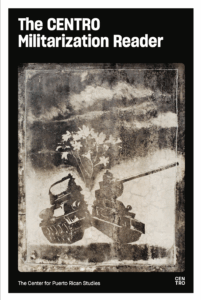
With this context in mind, at CENTRO, we decided to look in our archive to think about some of the political, social, economic, ecological, and cultural effects that more than 125 years of military occupation have had on Puerto Rico and its people. Following the model of the AfroCENTRO Reader (2023), we selected articles from Centro Journal and Centro Press that help us understand the impact—not only material but also to our collective psyche—of so many years of colonial and military exploitation. The selection follows a roughly chronological order of the central conflicts of the 20th and 21st century in relation to Puerto Rico and the Puerto Rican population. Particular focus has been placed on the most recent—and again, central—conflict of the last few decades, Vieques, because of its symbolic relevance to our present.
The CENTRO Militarization Reader
Share to:


